Planning guide
Huayna Picchu: How Hard Is It and Should You Climb It?
Written and reviewed by the Highland Adventures trip specialist team · Updated
Huayna Picchu is short but genuinely steep and exposed, and for most people it takes roughly 45 to 60 minutes up. A reasonably fit person with no fear of heights can climb it comfortably; it is not the right choice for anyone with vertigo, unstable knees, or young children.
It is the steep peak that rises directly behind the citadel in the classic photo, summiting at roughly 8,800 ft (2,682 m) above a citadel that sits near 7,970 ft (2,430 m). The climb is a set of narrow Inca stone staircases, with cables to hold in a few places and a one-way flow near the top. The dramatic reputation is real about the steepness and overstated about the danger: careful climbers manage it every day.
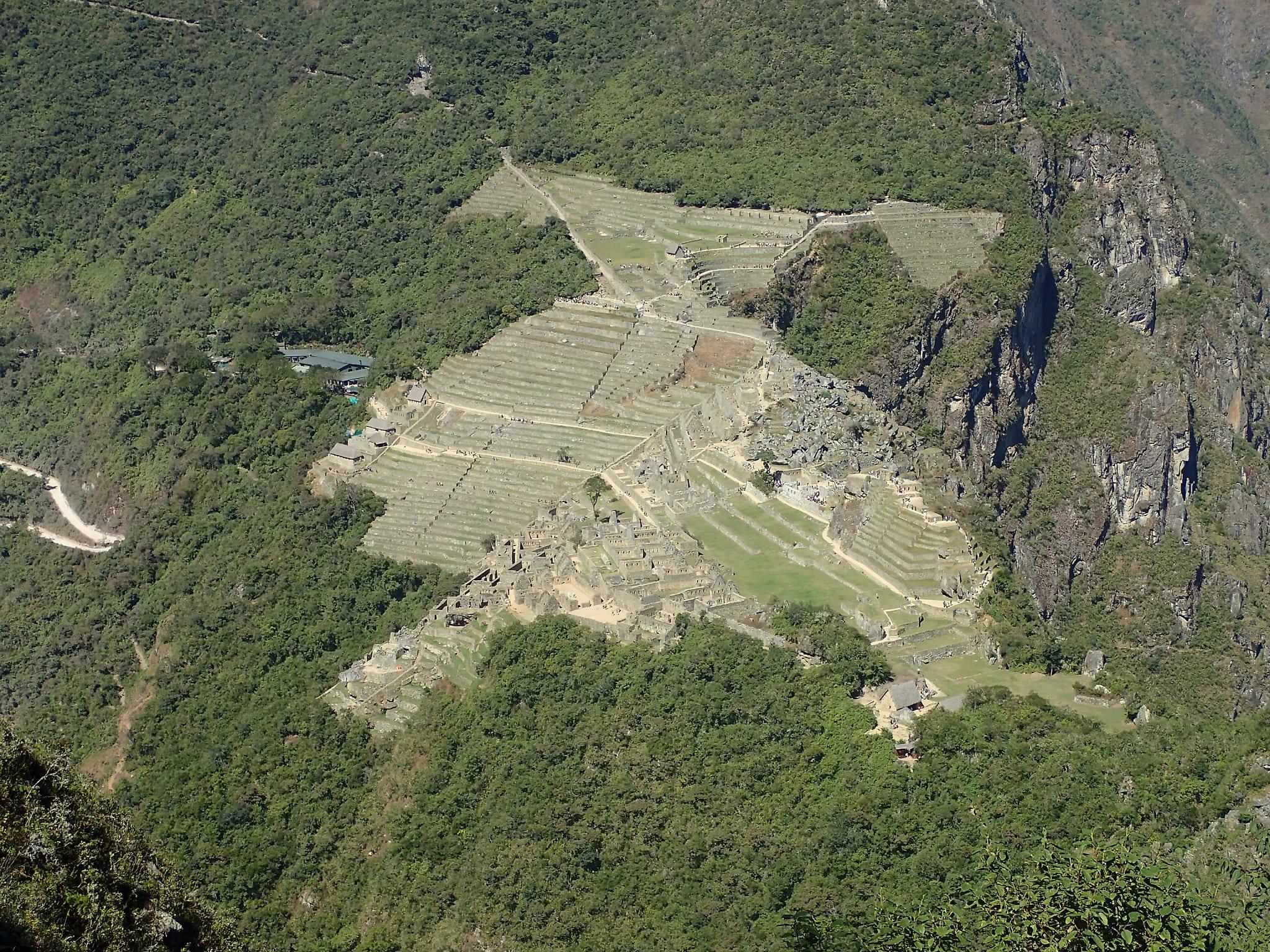
What the climb is actually like
The trail is original Inca stonework: narrow staircases cut into the peak, some steps tall and uneven, with sections where the path hugs the mountain and the ground falls away beside you. In the steeper, more exposed stretches there are fixed cables to hold, and near the summit the route narrows enough that traffic runs one way. None of it requires climbing skill or equipment, but it does ask for a steady head and a willingness to take your time.
You will hear it called the "stairs of death." That name is dramatic, and the reality is calmer: the exposure is real, but the steps are well-worn, the cables are where you want them, and climbers who move deliberately and watch their footing manage it without incident every day. The danger comes from rushing, from wet stone, and from panic on the exposed sections, not from the climb being beyond an ordinary fit person.
Plan on roughly 45 to 60 minutes to the top for most people and a similar time down, though the descent can feel slower because you are facing outward on the steep steps. It is a real effort at altitude, so expect to be breathing hard.
How booking works
The Huayna Picchu climb is built into Route 3-A of Circuit 3, so you do not buy a separate ticket for it: you choose that route when you book your Machu Picchu entry. The place is capacity-limited and is among the first entries to sell out, which is why early commitment matters more here than for almost any other part of a visit.
The route rules are set by the Peruvian authorities and change from year to year. As they stand: The two mountain routes allow longer: Huayna Picchu (route 3-A) up to 5 hours 30 minutes in total and Machu Picchu Mountain (route 1-A) up to 6 hours 30 minutes, each with the citadel included, on two morning entry windows. (RM 528-2023-MC, verified ) From January 1, 2027, Ministerial Resolution 407-2026-MC sets entry to Machu Picchu Mountain (route 1-A), Huayna Picchu (route 3-A) and the Great Cavern (route 3-C) until 10:00 a.m., and visitors start back from the summits and the Great Cavern by 12:00 noon; climbers sign in at the control point from 7:00 to 8:00 a.m. or from 9:00 to 10:00 a.m. The total time allowed stays at 6 hours 30 minutes for Machu Picchu Mountain and 5 hours 30 minutes for Huayna Picchu, citadel included. Visits dated through December 31, 2026 keep the earlier timetable. (RM 407-2026-MC; RM 408-2026-MC, verified ) Entry tickets are sold only by Peru's Ministry of Culture. Online sale runs through the Ministry's official ticket site by direct sale: a ticket is issued in the visitor's name only once payment is confirmed, within a 15-minute purchase window, and an unpaid place goes back on sale. Direct sale began on September 22, 2026, and on October 14, 2026 the Minister of Culture said tickets will be sold this way from now on, with confirmed payment and no reservations. (Ministry of Culture notice, Sep 22, 2026; El Peruano, Oct 14, 2026, verified ) Entry is arranged as part of the trip.
Sleeping in Machu Picchu Town the night before makes an early entry easy; our Aguas Calientes guide covers the town. How the circuits and routes fit together is in Machu Picchu tickets, circuits and routes.
Huayna Picchu vs the other summit climbs
Three different peaks rise around the citadel, and they suit very different climbers. Here is how they compare.
| Huayna Picchu | Machu Picchu Mountain | Huchuy Picchu | |
|---|---|---|---|
| Route | Route 3-A (Circuit 3) | Route 1-A (Circuit 1) | Route 3-D (Circuit 3) |
| Character | Short, steep, iconic peak behind the citadel | Taller, longer, steady switchbacks; broadest aerial view | Short, gentle hill; quick elevated view |
| Exposure | High: narrow steps, cables, one-way flow | Lower: wider, less exposed path | Minimal |
| Who it suits | Fit climbers comfortable with heights | Walkers wanting a serious ascent without severe exposure | Families and anyone easing into a summit |
The trade-off with the postcard view
Here is the catch most people miss: Circuit 3 does not include the classic upper viewpoint. Its routes tour the lower citadel, with Huayna Picchu rising behind you rather than in frame, so the ticket that gets you the famous climb does not get you the famous photo.
If you want both the postcard shot and the Huayna Picchu summit, that means either planning around two separate entries or deciding which one matters more to you. It is worth settling that question before you book, because the circuit and route are fixed at purchase.
Who should pick something else
Huayna Picchu is a genuinely good experience for the right person and a stressful one for the wrong person. Consider a different route if any of these describe you:
- You have vertigo or any real discomfort with heights and exposed drops.
- Your knees are unstable or hard on steep, uneven descents.
- You are traveling with young children.
- You want the classic postcard view, which lives on a different circuit.
- You want a serious climb without severe exposure: Machu Picchu Mountain (Route 1-A) is taller, wider, and less exposed, and runs year-round.
- You want an elevated view with an easy walk: Huchuy Picchu (Route 3-D) is short and gentle.
Questions travelers ask
How dangerous is Huayna Picchu really?
The exposure is real, but the danger is usually overstated. The steps are steep, narrow, and worn, with cables to hold in the exposed sections and a one-way flow near the top. Climbers who move deliberately and watch their footing manage it safely every day. The risk comes from rushing, wet stone, and panic on the exposed stretches, not from the climb being beyond an ordinary fit person.
How fit do you need to be to climb it?
Reasonably fit is enough. It is a short climb, roughly 45 to 60 minutes up for most people, but it is steep and it is at altitude, so expect to be breathing hard. The bigger question is not fitness but heights: if exposed drops make you uneasy, that matters more here than raw stamina.
Huayna Picchu or Machu Picchu Mountain: which should I climb?
Pick Huayna Picchu for the short, dramatic, iconic peak if you are comfortable with steep exposed steps. Pick Machu Picchu Mountain (Route 1-A) if you want a taller, longer climb on a wider, less exposed path with the broadest aerial view, and it runs year-round. They sit on different circuits, so this choice also decides which circuit you book.
Can I add Huayna Picchu when I arrive?
No. It is built into Route 3-A of Circuit 3 and chosen when you book, not added at the gate, and it is one of the first entries to sell out, so early commitment matters. The citadel is visited on 3 circuits holding 10 routes, and every ticket is sold for one circuit, one route, one date and one entry time. (RM 528-2023-MC; RM 284-2025-MC, verified )
Where to go from here
- Circuit 2 vs Circuit 3
The postcard view or the Huayna Picchu climb: how to choose the right circuit.
- Circuit & Route Recommender
Answer a few questions and get a best-fit route and a backup, no email needed.
- Every circuit and route, sourced
The current verified structure and allocations, dated when we last checked it.
- Machu Picchu by Train
Our 7-day classic, built around the circuit and climb that fit your visit.
- Custom Peru Trip Planner
A feasibility read for your month and group, no email required.