Machu Picchu tickets and circuits
Every ticket is sold for one circuit, one route, one date and one entry time, across 3 circuits holding 10 routes. The citadel admits up to 5,600 visitors a day in high season and 4,500 in low season, so the popular routes sell out furthest ahead in the dry season. A citadel visit lasts up to 2 hours 30 minutes from your entry.
Getting to Machu Picchu from Cusco
There is no road to Machu Picchu for regular vehicles: every visitor arrives through Machu Picchu Town (Aguas Calientes). Most drive from Cusco to Ollantaytambo in the Sacred Valley and take the train from there, about 1.5 hours, then ride the shuttle bus or climb the footpath to the gate. Sleeping in town the night before lets you enter early, on the slot you want.
Best time to visit Machu Picchu
The dry season, roughly May through September, is the most reliable time to visit, with clear mornings and firm trails, and also the busiest. April and October are the shoulder months: still green, with thinner crowds. The Inca Trail network closes every February for maintenance.
The Inca Trail and other treks
The classic Inca Trail walks into Machu Picchu through the Sun Gate, and the network admits up to 750 people a day. Places are bought only by travel agencies registered with the Ministry of Culture's Cusco office, in each hiker's name. The Salkantay trek is the wilder, higher route, with far easier availability.
On our Inca Trail trips, operated by Highland Adventures, the permit is arranged as part of the trip.
Huayna Picchu and Machu Picchu Mountain
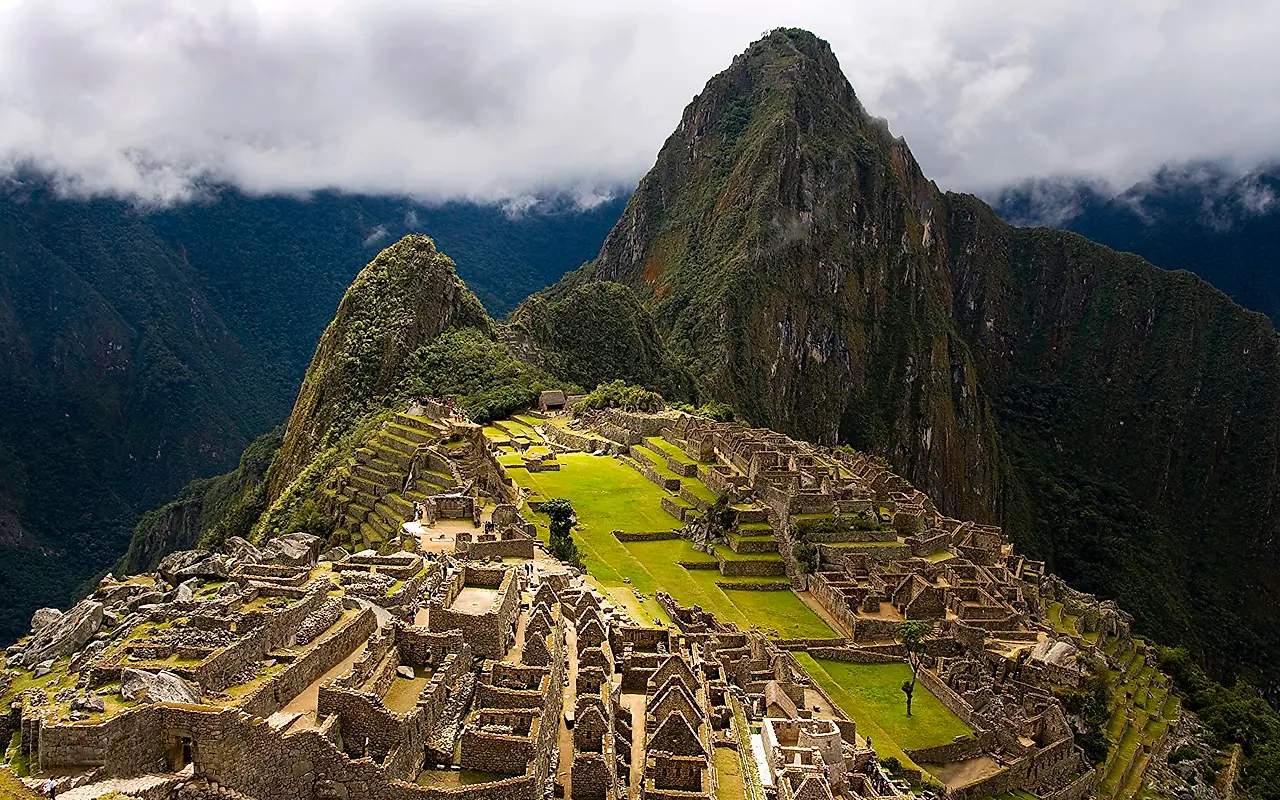
Huayna Picchu is the steep peak behind the citadel in the classic photo: roughly 45 to 60 minutes up narrow stone staircases, comfortable for a fit climber with no fear of heights. Its routes sit on Circuit 3, and a mountain ticket allows up to 5 hours 30 minutes on Huayna Picchu or 6 hours 30 minutes on Machu Picchu Mountain, citadel included. Without a climb, Circuit 2 is the default for a first visit.
Cusco, the Sacred Valley and altitude
Cusco sits at about 11,150 ft and most visitors feel it within hours of landing; Machu Picchu is much lower, at about 7,970 ft (2,430 m). The Sacred Valley lies between the two, lower and warmer than Cusco, and the most common train to Machu Picchu leaves from Ollantaytambo at its western end. Sleeping low before you sleep high is the easiest way to acclimatize.